
India's Trusted Vedic Astrologer & Palmist
Dr. Prodyut Acharya — Best Astrologer in West Bengal, based in Ranaghat
MyAstrology — Vedic Astrologer & Palmistry Expert Dr. Prodyut Acharya
Indian Vedic Astrology is not merely a shastra — it is a wellspring of ancient knowledge, born from the roots of Sanskrit: jyoti (light) and isha (God). Jyotish Shastra, or Jyotish Vidya, is the science that reads the human soul through the rhythms of the cosmos.
Jyoti is the symbol of consciousness flowing beyond the walls of light; isha means to follow, to seek. Thus Jyotish Shastra is that light which enters the depths of consciousness to reveal the hidden language of the soul.
Indian astrology has never been mere fortune-telling. It is a scripture of wisdom — a consciousness-revealing system that shows the soul its destination. It does not tell you what you will get; it tells you who you are, why you came, and where you are headed.
"कालोऽस्मि लोकक्षयकृत् प्रवृद्धः।"
— Bhagavad Gita 11
This shastra sees the future not as a fixed fate, but as a flowing stream of possibilities. United with self-knowledge and past karma, it reveals new paths.
🪐 Janam Kundali: The Silent Screenplay of the Soul
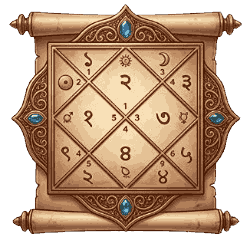
A Janam Kundali (Birth Chart) is not merely a map of planets and stars — it is the soul-script, where every planet and zodiac sign mirrors the mind, character, resolve and the subtle patterns of a life's experience.
At the moment of birth, the universe sends a silent signal — "this soul has come for its own specific journey."
"कालः कर्मस्वभावोऽयं जीवस्यैव प्रसंगतः।"
— Time, karma and nature are inseparable parts of life.
According to ancient Indian philosophy, human character and resolve take birth in the shadow of planetary vibrations. The positions of planets and stars influence our subtle energy system — the chakras, nadis, pineal gland and thought patterns.
Modern neuroscience and quantum biology also acknowledge this soul-body relationship.
"The stars and planets are the visible symbols of inner psychological forces."
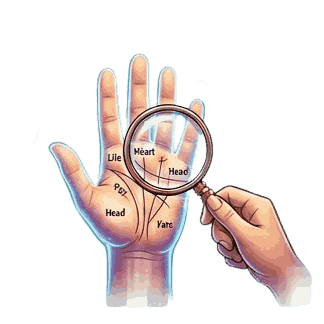
Therefore, Jyotish Shastra is not merely a system of knowing the future — it is the great science of self-knowledge, awakening of consciousness and life transformation. To explore more deeply, read about Palmistry and Gemstone Consultation.
With Dr. Prodyut Acharya — Vedic Astrology, Palmistry and Kundali Analysis — online, at your own convenience • English, Hindi & Bengali
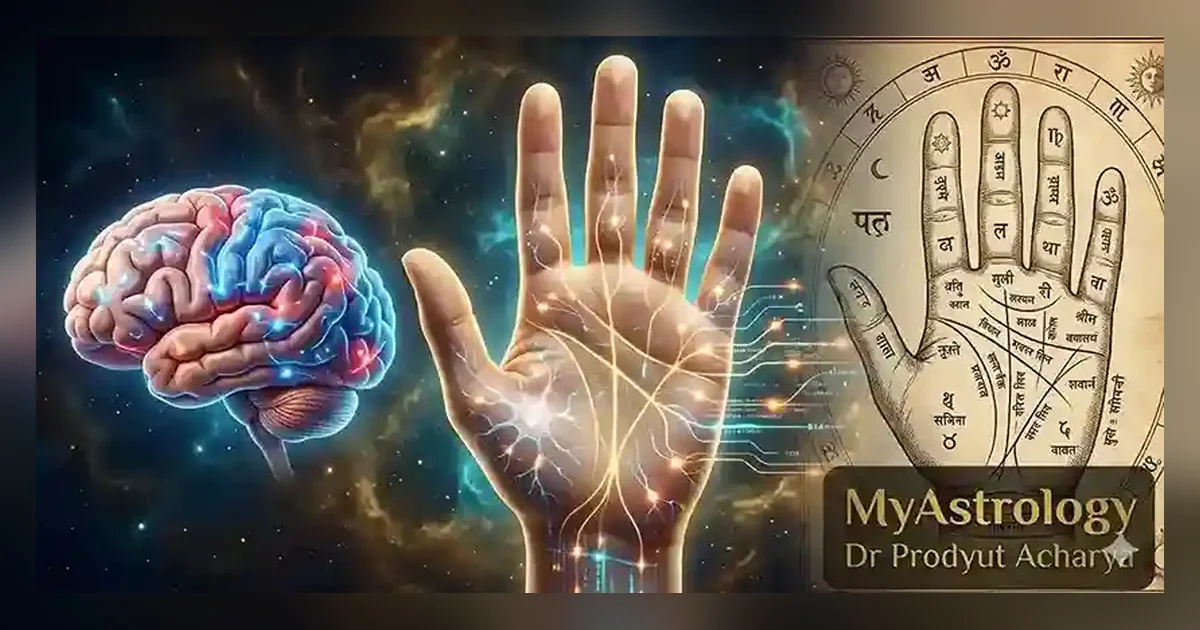
Send photos of both palms via WhatsApp — a detailed analysis and remedy will be shared over the phone within 3–4 hours.
- Send front and back photos of both hands
- Detailed phone analysis within 3–4 hours
- All questions answered — 20 minutes
- Remedies based on your palm lines
- Available in English, Hindi & Bengali
🔒 Razorpay • UPI / Card / Net Banking
Palm lines and birth chart analysed together — maximum benefit at minimum cost.
- Complete palm analysis with remedies
- 90+ page Birth Chart PDF
- PDF sent via WhatsApp
- Detailed phone discussion — 30 minutes
- All questions answered with remedies
🔒 Razorpay • UPI / Card / Net Banking

Before marriage, matching the birth charts is vital for a happy married life. Mind compatibility, Manglik dosha and marital bliss are analysed in depth.
- Both partners' charts matched
- Mind compatibility and marital harmony
- Manglik dosha and virtues check
- 90+ page PDF — sent via WhatsApp
- PDF + 30-minute phone discussion
- Remedies for a happy married life
🔒 Razorpay • UPI / Card / Net Banking

📲 Consultation details will be sent to this number on WhatsApp.
🔐 Secured by Razorpay • UPI • Card • Net Banking
Payment Successful! 🎉
Payment received.
The date and time of your consultation will be confirmed via WhatsApp.
⏳ Origins and Historical Roots of Vedic Astrology
The deep current of ancient Indian astrology — Jyotish Shastra and Jyotish Vidya
"The nation that keeps time with the rhythm of the ages is truly civilised." — This saying captures the inner philosophy of Indian civilisation, built upon the importance of moving in harmony with the rhythmic motion of time and the cosmos.
The birth of Indian astrology was not the result of a single event. It is a continuous stream of consciousness — the fruit of millennia of meditation, observation and inner vision by the ancient rishis and sages.
Among the six branches of the ancient Vedangas, "Jyotish" — though last in order — was the most important, for it was known as the "eye" of the Vedas.
In the Rigveda, Yajurveda and other Vedas, a true understanding of kala (time) was held to be essential, since the performance of dharma and karma depends on choosing the right moment. For example:
"कालः कृत्वा भवति सदा करणं धर्मस्य।"
That is, "For the performance of dharma, time is an indispensable medium."
It was to understand this kala that Indian Vedic Jyotish was born — a science that observes not only planetary and stellar motion, but also the harmony between nature, seasons, human karma and consciousness. This knowledge is reflected in daily horoscopes and the Panchang.
Time and the stars in the poetic vision of the Vedas and Upanishads
In the Rigveda and Yajurveda, the relationship between the Sun, Moon and stars, and their positions, are described poetically as parts of a great cosmic machine:
"सूर्यो नक्षत्रमाहिता यत्रा नाभिः समाहितः।"
That is, "Sun, stars and Earth are bound together in one centre, in one great machine."
And
"यथा सोमोऽव चन्द्रमसि, तथा सूर्यः प्रतिष्ठितः।"
That is, "As the Moon is born within Soma, so the Sun is the central pillar of the time-machine."
Through these verses, the Sun and Moon are shown to be more than planets; they are the centre of the cosmic map of time, whose positions define the course of life cycles and seasons. The "establishment" of the Sun refers to its importance as the primary pillar of time and light.
In this way, Indian astrology is a spiritual and scientific science of time, analysing the harmony of human life, nature and consciousness.
Karma theory and the philosophical foundation of planetary influence
The ancient astrological text Brihat Parashara Hora Shastra states:
"जन्मकाले यदा ग्रहास्तिष्ठन्ति यथासभम्।
तदा तेषां प्रभावेन जातकस्य शुभाशुभम्॥"
— Brihat Parashara Hora Shastra 1.6
That is, "When the planets stand in their specific positions at the moment of birth, their combined influence determines the auspicious or inauspicious results in the native's life."
But this influence should not be seen merely as "fate" — it must be understood through karma and past impressions. Every result in life is the combined outcome of past-life karma and present actions, and it is changeable with the flow of time.
The deeper philosophy of the Vedas says:
"कालः साक्षात् परमेश्वरः।"
That is, "Time itself is the living manifestation of God."
That is, time or kala — which we call changeable and continuous — is itself the living form of God, through which the laws of creation and karma keep moving.
Not a conclusion, but a deeper vision of Jyotish
Indian Vedic Jyotish has never been merely a system of prediction or a determiner of fate. It is a shastra born of reverence for life and a deep realisation of time.
In the Vedas, Upanishads, Smritis and Puranas, Jyotish is given a high place in understanding time and cosmic rhythm.
The Upanishadic saying "तदेतत्" indicates that behind outer events lies the deep mystery of the inner world. The arrangement of planets and stars at birth is not mere coincidence — it is a perfect reflection of the soul's complete union with the wheel of time.
✨ A Philosophical Interpretation of the Planets and Their Influence
Moon — the king of the mind and symbol of emotion. When the Moon is strong, the mind is calm and rich, emotions controlled. When it is weak, anxiety, restlessness and confusion increase. Just as Plato's ideas of "attention" and "self-reflection" are important, so too does the Moon's balanced influence give a person the ability to consciously manage their emotions.
Sun — the centre of the soul and the identity of "I". A strong Sun means self-confidence, leadership and the expression of ambition. A weak Sun can cause pride, envy and self-centredness. Just as in Vedanta the "Atman" is the highest power, so too the Sun is its luminous form in astrology.
Mercury — the symbol of intelligence and reason. In a good position, Mercury develops thinking and logic; when weak, it brings confusion and uncertainty. This clarity of thought is where modern psychology and astrology meet.
Saturn — the planet of patience, discipline and karmic results. When Saturn is strong, the fruit of hard work and endurance is reaped; when weak, obstacles and despair appear. Saturn's influence in the journey of life is a philosophical exercise in the importance of patience and responsibility.
Mars — the symbol of courage, strength and valour. A balanced Mars makes one enterprising and confident; when weak, it produces anger and quarrel. It is the active energy of life and the model of the warrior.
Jupiter — the symbol of knowledge and spirituality. A favourable Jupiter makes one learned and philosophical; when weak, it brings confusion in dharma and knowledge. Jupiter's importance as a pioneer of spirituality is unsurpassed.
Venus — the planet of love, beauty and enjoyment. A favourable Venus brings love and material success in life; when weak, greed and infidelity.
Rahu — the symbol of subconscious desire and longing. In a favourable position, Rahu brings creativity and innovation; when weak, it brings confusion and misdirection.
Ketu — the planet of spirituality and detachment. A favourable Ketu gives peace of mind; when weak, it brings isolation and despair.
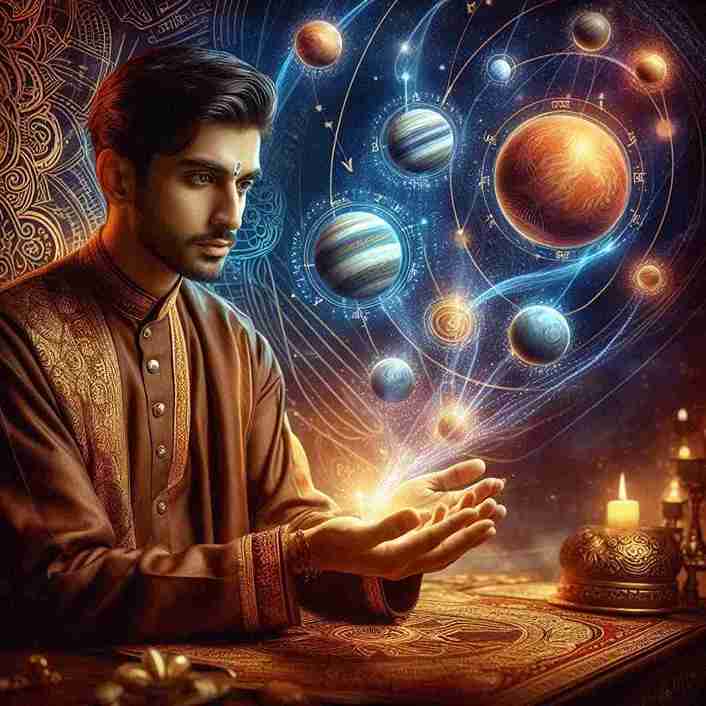
In the light of Jyotish Shastra, the planets are not merely objects in the sky; they are symbols of the deep currents of our mind, intellect and soul.
✨ Where Modern Psychology Meets Vedic Jyotish: An Analysis by Dr. Prodyut Acharya
Sigmund Freud said, "Man is not conscious of the greater part of his inner world." Indian Jyotish Shastra gives light to the darkness of that unconscious mind, becoming a guide to the soul's inner vision.
In this wisdom, a professional astrologer and palmist such as Dr. Prodyut Acharya helps us perceive the subtle mental and spiritual situations of our life — something that is not easily understood by any other science.
The insight of MyAstrology helps us seek answers to the deepest questions of our life and see a clear picture of our possibilities — not by telling us the future, but by leading us deep into the present.
In this way, the planets are not at all external objects. They are expressions of the energy of consciousness and the flow of the spirit, with which the soul has a profound connection. Understanding this subtle outline of our own life is itself real "birth-chart" analysis.
🌟 In the Light of Vedic Jyotish: Not a Slave of Fate, but the Creator of Consciousness — A Deep Unfolding of the Birth Chart
"जन्मकाले यदा ग्रहास्तिष्ठन्ति यथासभम्, तदा तेषां प्रभावेन जातकस्य शुभाशुभम्।"
That is, the positions of the planets at the moment of birth determine the auspicious and inauspicious tendencies of a person's life.
For example, if one's Moon is in Cancer, that person is emotional, sensitive and affectionate towards family. But this information should not be taken as a rigid decree of fate — it should be taken as a mirror for self-knowledge.
When Saturn is strong in the tenth house or in one's career, patience and perseverance become the driving force of life. From this kind of realisation is born the desire for self-control and self-improvement.
"उद्धरेत् आत्मनात्मानं नात्मानमवसादयेत्।"
That is, "Lift yourself up; do not lower yourself."
This is the inherent call of Jyotish — know yourself, write your own destiny.
The birth chart gives us the opportunity to understand our preferences, aversions, motivations and obstacles. From this is born the power of conscious decision-making, which — instead of blindly following fate — helps one understand one's own tendencies and choose the right path.
In astrology we find the idea of daily and occasional karma, where the shastra says that the path of effective work and sadhana is determined according to specific time and position.
As the Shrimad Bhagavatam also says — the truly wise person internalises their mental tendencies, character and strengths and weaknesses, and builds themselves as a field of sadhana. Only then does Jyotish Shastra shine as a path of light — "jyoti" by "isha".
🕉 According to MyAstrology, Building Fate Through the Power of Consciousness: An Astrological and Philosophical Synthesis
"Astrology represents the sum of all the psychological knowledge of antiquity."
— Carl Jung
That is, astrology is the reflection of the entire body of ancient psychological knowledge. In his "synchronicity" theory, the inner connection between coincidental events and internal mental states is revealed — which manifests in the positions of planets and stars.
This theory strengthens the foundation of astrology, where planets and stars are not merely external objects, but symbols of mental and spiritual consciousness.
"कर्मण्येवाधिकारस्ते मा फलेषु कदाचन।" (2.47)
That is, "Your right is to action alone, never to its fruits."
Here we see a similarity with Kant's theory of "freedom and responsibility" — where human freedom lies in one's actions, consciousness and reason.
Because the future is uncertain, we are free. If the future were predetermined, the development of consciousness and self-realisation would be meaningless. Rather, the future is a web of possibilities, written through consciousness, decision and effort.
Like the potential of a seed — without proper care, it cannot become a tree. In the same way, our future is built through the right conduct of action and consciousness.
But in modern society, the distorted form of astrology — confined to mere fortune-telling and amulets — makes people fate-dependent and cuts them off from self-awareness.
In truth, astrology does not mean knowing the future — it means lighting the lamp on one's own path. With the help of a genuine astrologer like Dr. Prodyut Acharya, recognising one's fears, desires, strengths and weaknesses is itself the source of true power.
From this realisation is born the self-confidence and consciousness to build one's own future.
Learn more about What is Jyotish Shastra? and On Jyotish Shastra. Also read about Vedic Astronomy.
🔬 Indian Astrology, Quantum Vibration and the Power of Will — A Convergence
One of the core principles of modern quantum physics is that every object, thought and feeling is actually a kind of vibration. Our attention, thoughts and feelings resonate at specific frequencies with the universe, creating a kind of resonance.
Indian Vedic Jyotish has honoured this idea since ancient times — where the positions of the planets and stars and their vibrations open the doors of the possibilities of human life.
The "Observer Effect" in quantum science says —
"Observation affects outcome."
That is, the way you see or feel the world is what shapes reality.
This idea is the core mantra of ancient Indian philosophy — "The mind is the creator of nature."
An important part of our brain is the pineal gland, which receives the influence of light and the lunar cycle. Research has shown that this gland controls our hormones and profoundly affects our mental state and behaviour.
On the other hand, research known as Quantum Brain Dynamics has shown that certain parts of our brain work through quantum resonance, influencing our thoughts, feelings and decisions.
In other words, at the moment of birth, the planets' positions are not merely external — they are the reflection of the "vibration" of our inner soul, the language of the mind. Jyotish Shastra reads that language and helps us with self-knowledge and right decisions.
🧠 Consciousness, Vibration and the Mental Philosophy of Fate: Astrology and Science
"If you want to find the secrets of the universe, think in terms of energy, frequency and vibration."
— Nikola Tesla
Indian Jyotish Shastra is likewise dedicated to the exploration of the subtle relationship between the vibrations and pulsations of human life and the universe.
The birth chart is a kind of Cosmic Resonance Map, where each planetary position is the reflection of a specific vibration. Just as we become emotional hearing a melodious song, so too the movement and position of the planets calm or excite the waves of our mind.
According to today's scientific "Observer Effect", the direction of our intention or consciousness affects reality. That is, what we think, the universe responds to.
The Law of Attraction says — "What you think and feel, you attract." Many consider this merely a psychological technique, but ancient Jyotish Shastra applies it even more deeply.
For example, if the Moon or Rahu is weak, mental fear, doubt and negativity increase, which attracts undesirable situations. On the other hand, a strong Mercury or Jupiter brings logical and right-minded thought, and brings the universe along.
Therefore, fate is not a fixed result; it is a Conscious Alignment — aligning one's thoughts, consciousness and vibration with the vibration of the universe.
Jyotish Shastra is a tuning-fork of the mind, helping to tune the melody of our thoughts to the music of the universe.
When we say "fate", we understand it as something outside our control. But neuroscience and quantum consciousness research show that consciousness determines the form of reality.
Our habits, feelings and willpower can change the neural pathways of the brain. And this is why the birth chart is not superstition, but the precise design of consciousness.
Therefore,
"The Jyotish of consciousness is what truly determines the future."
Jyotish is not just a shastra of telling the future, but a guide for the development of present consciousness. The birth chart is a map, and we are the travellers on that map, engaged in self-discovery.
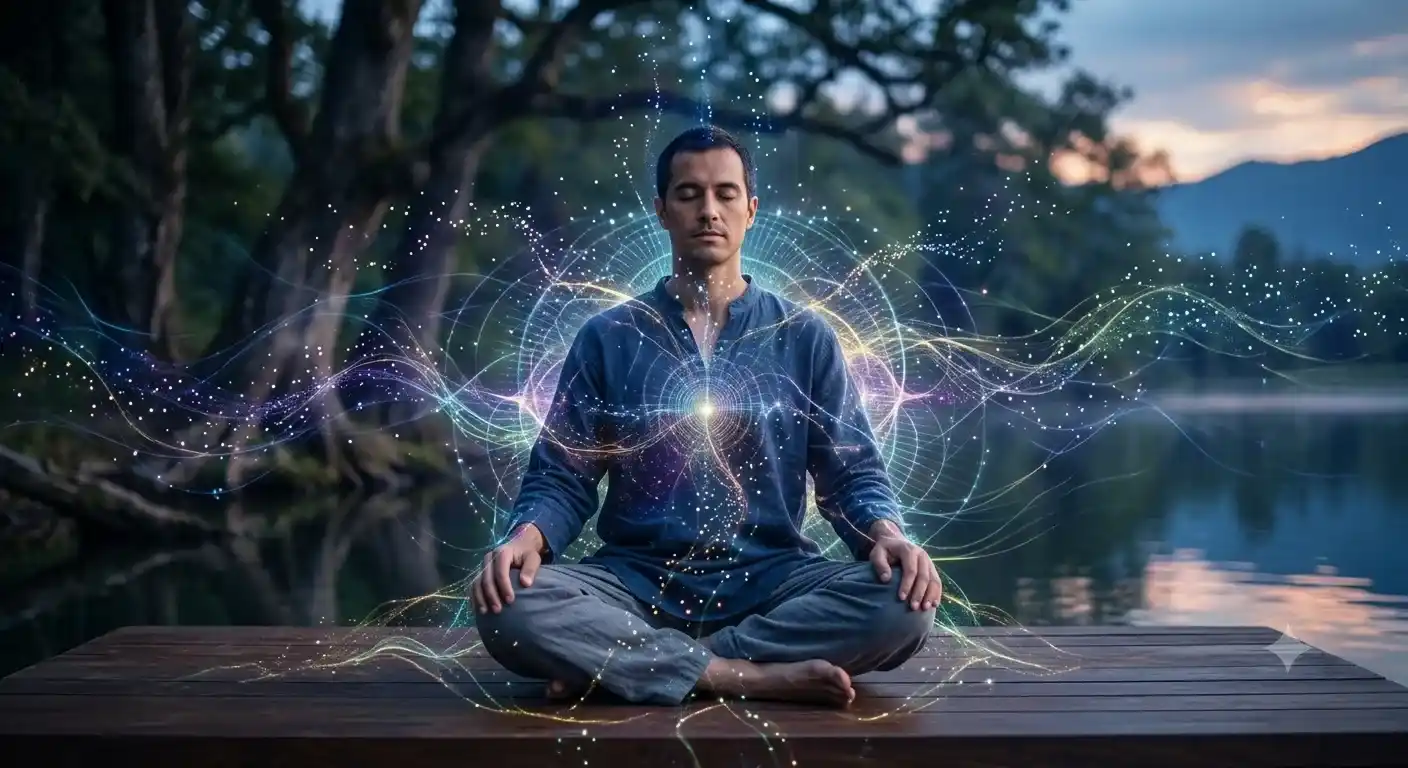
🌿 A Deep Analysis of Relationships and Self-Awareness through Vedic Jyotish
Life is an indescribable current, flowing through the multi-dimensional waves of relationships, work, health, crisis and possibility. Losing direction in this current is easy — but if there is a sense of direction, only then is human life fulfilled.
The Rigvedic rishis honoured the principle "यथा राजा तथा प्रजा" — as the ruler, so the subjects. That is, the course of human life is determined by spiritual and epistemological direction. This direction lies hidden in an invisible imprint at the very moment of birth — revealed in the Jyotish Shastra written by the Brahman-knowing sage Bhrigu and sage Parashara.
In the birth chart, the seventh and fifth houses take precedence as indicators of relationships, love, marriage and married life. But a relationship is not merely the arrangement of planets; it is an expression of consciousness. As Sage Jaimini said — "A relationship is not even a single point of collision between two souls; it is the subtle music of consciousness."
When searching for the root cause of discord in domestic life, we sometimes see it in the inauspicious aspect of Saturn and Mars, and sometimes in the weakness of Rahu or the Moon — the married relationship becomes distressed.
But this does not mean the relationship will break — rather, it is a priceless opportunity for self-inquiry. Why do I seek dependence? Why do I feel the urge to change the other? Why is the same mistake repeated over and over? These questions are called in Jyotish "the search for self-understanding."
As the Shrimad Bhagavatam also says —
"অন্তর্দর্শনাত্মক বোধে প্রত্যেক দুঃখ সুখের জন্ম দেয়।"
(Bengali aphorism: every sorrow gives birth to joy when seen through inner awareness.)
From this vision we understand —
"Jyotish does not break relationships; it teaches the language of relationships."
Understanding this language and deeply realising oneself and the relationship is the mainstream of self-development. That is why Jyotish is a kind of healing — which brings a soul wandering on the wrong path back to the right one.
🕉 The Role of Jyotish in Work, Health and Self-Development: A Pillar of Light from the Wisdom of the Rishis
Work is not merely a means of earning; it is a part of the soul's journey. The tenth house of the birth chart and its lord indicate our sense of work-related duty and responsibility.
According to Sage Parashara, the dasha (period) and transit of life together determine our circumstances and mindset. For example, a native of Aries in a Saturn mahadasha faces a test of hard work and stability; Rahu's transit in Scorpio lagna brings sudden changes in life.
But we must not be afraid — rather, becoming aware is the true teaching of Jyotish.
Sage Bhrigu said —
"Storms will surely come on the path, but if the traveller prepares before the storm, their steadiness remains unshaken."
Here Jyotish does not change fate; it works as a tool for forming fate. As a singular direction of life, it teaches the art of understanding and directing the present.
In health and mentality too, Jyotish Shastra has a deep influence. The sixth, eighth and twelfth houses are the keys to the body and disease, while the Moon and the watery signs are the reflection of the mental state.
Just as modern psychology and medical science have established the "inseparable link between mind and body", so too does the shastra say —
"The instability of the mind's waves is the root of many physical diseases."
A weak Moon, Ketu and Saturn in the eighth house are not just signs of illness — they are signals of the mind. Excessive anxiety or hidden fear is an indication of these planets' weakness.
Here Jyotish Shastra and the healing of consciousness meet. The birth chart becomes a psycho-spiritual blueprint, through which a person finds the path to know themselves and go beyond illness.
Therefore, Jyotish is not a means of spreading fear, but a mirror of self-awakening. Every planet is a lamp of consciousness —
- Venus: the expression of love and beauty
- Mars: strength, action and drive
- Saturn: patience, karmic result and stability
If someone only worries about "when will the mahadasha end", they neglect the depth of Jyotish. But if they ask —
"What is this time teaching me?"
Then they move towards the search for the soul.
Jyotish Shastra is not merely a machine for determining the future; it is a priceless mirror of self-search. Every relationship, crisis, profession and illness is an insight written in the birth chart, an inner vision recorded by the stars. It unfolds the deep mysteries of our life and connects us with God-realisation.
This is the "rishi-drishti" (seer's vision) of the ancient sages — a deep self-realisation that shows the way from darkness to light.
🔮 Astrology — A Map of Light, Not Only for Knowing the Future but for Knowing Yourself
We often see astrology as a mysterious machine for knowing the future — but in reality, it is a powerful map of self-realisation.
"That knowledge which reveals consciousness — that is the true Jyotish."
The planets do not merely move in the sky; they move in the depths of our mind and consciousness. Jupiter's position reveals the development of belief; Saturn's discipline teaches patience and the direction of self-examination.
In today's age — amidst disbelief, restlessness and self-disconnection — astrology should be seen as an Inner GPS that shows us:
- Where am I standing in the stage of my life?
- Which inner crisis is now growing outside?
- What strength or weakness am I not perceiving within myself?
A true astrologer is the guide of this GPS: they will not say "this time is bad" — but rather, "this time is for introspection; for finding yourself again."
Uddhared atmanatmanam na atmanam avasadayet — Lift yourself up by yourself; do not let yourself be degraded. Jyotish is that mirror of upliftment; not a punishment or a fear.
Archetypal Symbolism — A Brief Reading of the Planets
- Mars: Not only anger — drive and courage.
- Moon: Not only mind — compassion and the consciousness of motherhood.
- Rahu: Not only confusion — the power of transformation hidden in illusion.
Whoever can read these symbols philosophically is the true astrologer — for they can show the battle of gods and demons within you. Freud said, "The unconscious controls us." Jyotish says — "Making the unconscious conscious is the true radiance of the soul."
If today we see astrology merely as a machine for knowing results, we are losing the most valuable aspects of this philosophy. Astrology is a living map — it does not show the future; rather, it says — "In the future, who can you become?"
Not fear — light; not obstacle — awareness; not fate — construction.
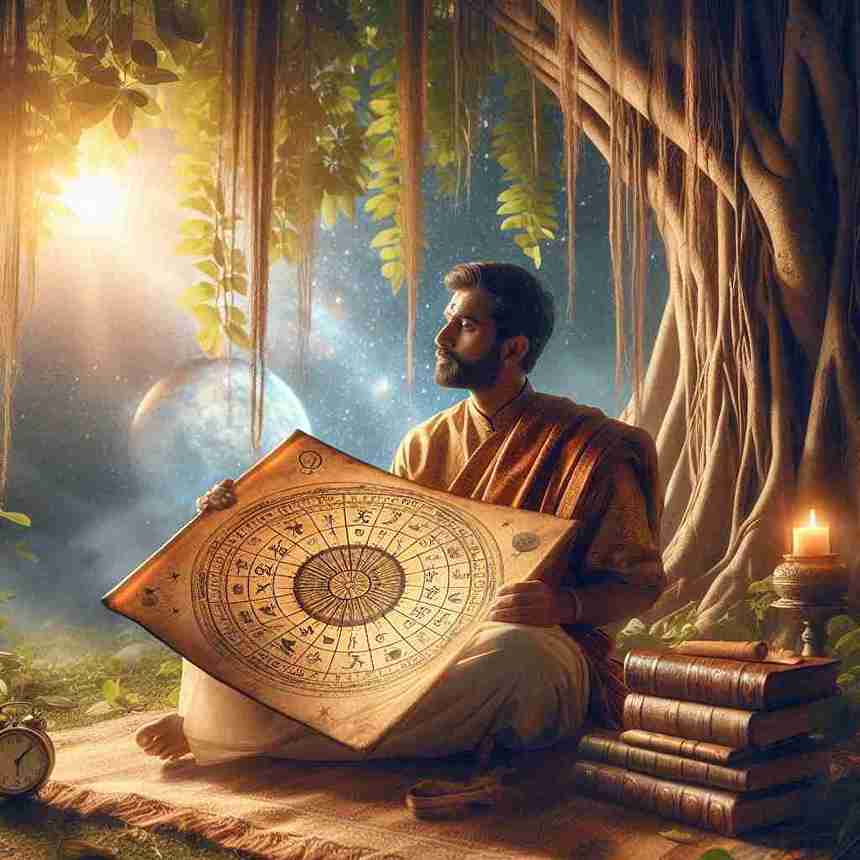
⭐ Client Experiences and Trust
10,000+ satisfied clients — consulted from across India and abroad
"Dr. Prodyut Acharya gave me the right direction at the hardest time of my life. His birth chart analysis was so accurate that I was stunned."
"He told me so many things by reading my palm — things only I knew. Consulting online was very easy. A truly knowledgeable person."
"I got my Kundali matching done before marriage, and today my married life is happy. Without Dr. Acharya's advice, I would have made a big mistake. Heartfelt thanks."
"I consulted from London over WhatsApp. Dr. Acharya's analysis was so detailed and accurate that it felt as if he were sitting right beside me. An extraordinary experience."
"I was lost about my career. Through Dr. Acharya's birth chart analysis and advice, I found the right path. Today I am established in my own business. A true guide."
"He predicted my health issue from my palm lines — and it later came true. His gemstone advice was also very scientific and logical. Very grateful."
Frequently Asked Questions (FAQ)
✨ The Illusion of the Fortune Market: The Confusion of Astrology in Advertising
Have you ever wondered — how can a single flash of an advertisement claim to change your fortune? Why must we hear from an unknown person's mouth, "All your life's problems are on my shoulders"? Is such a claim truly the fruit of spiritual knowledge or deep realisation — or a business of fear, blind belief and psychological weakness?
Today astrology stands at the edge of a divide — on one side, the sacred life-philosophy of centuries-old rishi tradition; on the other, the confusion of cheap, advertisement-driven sensationalism.
On one side lies the unblemished wisdom of the guru; on the other, colourful branding, "best astrologer" awards, and "apps" that claim to read your fortune in one minute — all together, an enormous "fortune market."
First, ask yourself —
"Is a chart analysis really possible in a minute?"
The awards or doctoral titles that many "astrologers" wear today — are they truly any acceptable standard for Jyotish Shastra? Or how were these awards obtained? At what price? Which organisation gave them, and is there any authentic evaluation behind them?
The more I think about this, the more a wave of disappointment rises — many astrologers' own lives are troubled, not in search of peace, but engrossed only in earning money. Yet in their advertisements, they claim "clients" by posting photos with celebrities — which is really just a form of commercial "promotion stunt."
French philosopher Jean Baudrillard makes it clear in his theory of "Hyperreality" — when a fabricated image is repeatedly shown, people accept it as reality, even though it is not real. These very people create a "fortune market" where the audience's spiritual vision is lost, and they become merely fans of a brand.
Therefore —
"Will you accept the market of illusion, or be a seeker of infinite knowledge?"
The Star-Written Qualities of a True Astrologer: The Light of Self-Realisation
The ancient texts of the rishis — the Vedas, Upanishads, Brihat Jataka, Phala Deepika — together describe the true nature of a real astrologer. He is not a fortune-teller; he is a philosopher, a rishi-like thinker and a guide.
- (1) Knowledge (Vidya):
The astrologer does not merely memorise the numbers of planetary periods. The Brihat Jataka says —
"न काले न च योगे च न स्वभावे न कर्मणि।
दृष्टिर्देशफलो यस्मात् तस्माज्ज्योतिषमुच्यते॥"
That is, it is neither time, nor yoga, nor nature, nor karma — Jyotish is the science of vision and direction.
- (2) Compassion (Karuna):
A true astrologer perceives the state of the listener's mind. He does not take money by frightening people; rather, through listening and compassion, he leads people towards the light of the soul.
As Carl Jung said — astrology is the reflection of the entire psychological knowledge of antiquity. A true astrologer speaks in that deep psychological language which connects with the heart.
- (3) Spirituality (Adhyatma):
The astrologer shows not the outer planetary movement, but the inner light. In the Brihat Samhita it is said —
"Jyotishaṃ Chakṣu Vedānām"
Meaning: Jyotish is the eye of the Vedas, which helps to see the truth.
Therefore, a true astrologer is not a spectator but a guiding philosopher. He does not tell the future; rather, he asks questions, shows light and awakens self-confidence.
To him, Saturn means restraint and a sense of duty.
Mars means the balance of strength and duty.
The Moon means the subtle flow of psychology.
He does not say — "Your dasha is bad", but rather —
"This is a time for introspection."
He does not say — "There is fear", but rather —
"Face the fear and light the lamp."
Today's extreme question is —
"Is astrology the selling of fear, or self-knowledge?"
If astrology becomes a "fear-selling centre", if its core philosophy is drowned in commercial awards and stunts; if in fear people stop their own thinking — then it is no longer Jyotish, but a spiritual corruption.
A true astrologer is — truthful, compassionate, fearless and philosophical. He does not teach you to be afraid; he teaches you to understand.
As Socrates said —
"An unexamined life is not worth living."
A true astrologer is the companion of that life-examination, who teaches you to ask —
"Where is your fear?"
"What did you want to become, and where do you stand today?"
"Which direction is the tug-of-war in your heart pulling you?"
Through these questions, he teaches you not the arithmetic of the planets, but the language of the heart.
Therefore be careful —
Fake astrologers build a business on fear. They create dependence through amulets, gems and unsolicited donations — which is often psychological exploitation.
The mantra of a true astrologer —
"उद्धरेदात्मनात्मानं" — you must uplift yourself by yourself. He does not rule your fate; rather, he holds up the mirror of upliftment.
A Brief Guide to Choosing a True Astrologer
- Philosophical: provides not horoscope but self-knowledge.
- Compassionate listener: hears with the heart, not only the ears.
- Fearless and rational: does not believe in creating unnecessary fear.
- Teaches self-reliance: empowers the client to make their own decisions.
- Rooted in shastra and humanity: knows the shastra and the time, and understands the human mind.